Skip to product information
1 of 1

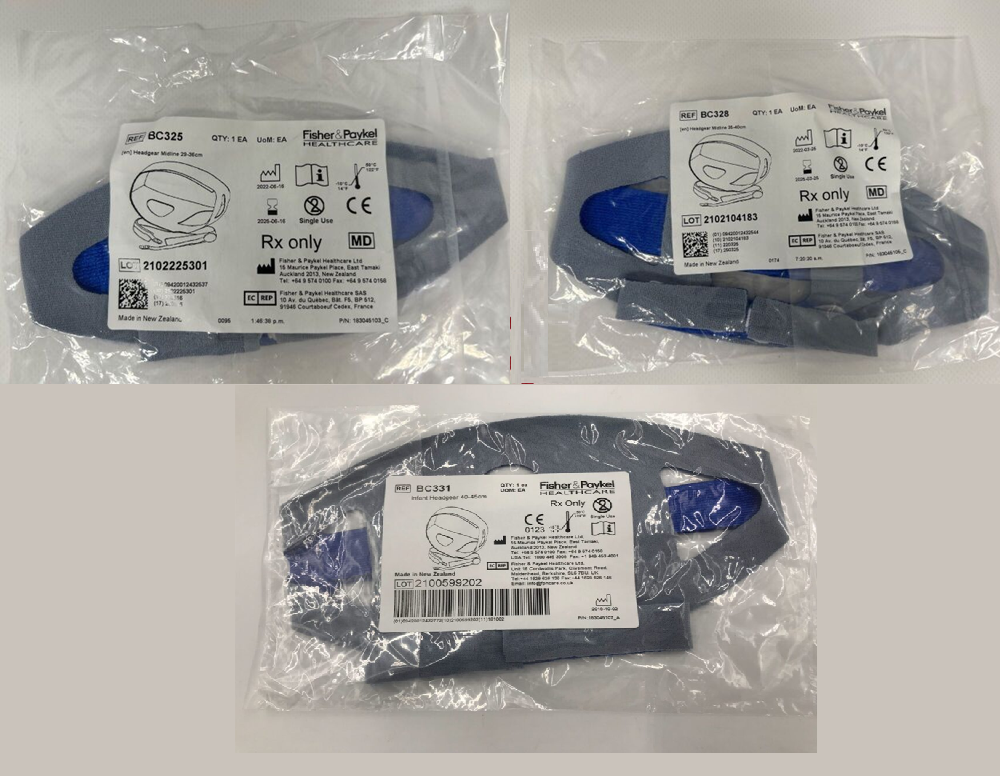
Fisher & Paykel Infant Headgear for FlexiTrunk Neonatal CPAP Interface — BC325 (29–36 cm), BC328 (35–40 cm), BC331 (40–45 cm)

Fisher & Paykel Infant Headgear for FlexiTrunk Neonatal CPAP Interface — BC325 (29–36 cm), BC328 (35–40 cm), BC331 (40–45 cm)

Inquire Now

The F&P Infant Headgear is a strap-based fixation accessory for the FlexiTrunk CPAP interface. It holds the nasal tubing assembly — and the connected nasal prongs or mask — in position during CPAP therapy. Unlike the Infant Bonnet (BC300–BC309), which envelops the entire head, the headgear uses a lighter strap configuration that sits above the ears and around the back of the skull, making it a preferred choice for larger, more stable neonates and growing infants.

The headgear is used in the NICU and neonatal ward for term and near-term infants whose head circumference falls in the 29–45 cm range. It is also suitable for infants transitioning off intensive CPAP support who are more tolerant of a lighter interface and require less complex fixation. The design maintains interface position across the full range of infant care positions while minimising heat retention on the scalp compared to a full bonnet.

Available in all three sizes in India through Shah Trading Corporation, Mumbai — trusted distributor and supplier of Fisher & Paykel Healthcare neonatal products.

BC325 (29 – 36 cm): Smallest headgear size — overlaps with BC309 bonnet range for larger preterm and term neonates
BC328 (35 – 40 cm): Mid headgear size — term neonates and infants on step-down CPAP
BC331 (40 – 45 cm): Largest headgear size — growing infants approaching discharge or transitioning to lower-support therapy

Bonnet vs Headgear: The Infant Bonnet (BC300–BC309) is typically preferred for very preterm and fragile neonates due to its full-head coverage and even pressure distribution. The Headgear (BC325–BC331) is a lighter alternative suited to more mature, stable infants — particularly those with head circumferences above 29 cm who generate sufficient head movement to benefit from a lower-profile fixation.

Key Features

Lower-Profile Than Bonnet - The strap-based design sits above the ears and at the occiput, leaving more of the scalp exposed. This reduces heat retention and feels less cumbersome for more mature infants who are increasingly mobile and active.

Open Crown Access - The headgear does not cover the top of the skull, providing unobstructed access to the fontanelle and scalp for routine clinical procedures without removing the CPAP interface.

Secure Interface Fixation - Despite being lighter than the bonnet, the headgear maintains reliable fixation of the FlexiTrunk tubing and nasal prongs or mask across supine, prone, and side-lying positions in clinically stable infants.

Interchangeable with Bonnet - The headgear attaches to the same FlexiTrunk tubing assembly as the bonnet. Clinical teams can switch between bonnet and headgear without changing any other circuit component — useful during escalation or de-escalation of respiratory support.

Compatible with Prongs & Nasal Mask - The headgear holds the FlexiTrunk interface in place regardless of whether nasal prongs or the nasal mask (BC800–BC803) is in use — supporting prong-mask rotation without any fixation change.

Technical Specifications

All Sizes — Reference & Sizing Data

Reference Head Circumference Pack Qty Typical Patient
BC325-05 29 – 36 cm 5 / box Late preterm and early term neonates
BC328-05 35 – 40 cm 5 / box Term neonates; infants on step-down CPAP
BC331-05 40 – 45 cm 5 / box Growing infants; pre-discharge or transitional CPAP


Parameter Detail
Fixation Type Strap-based headgear (above ears, around occiput)
Scalp Coverage Partial — lighter profile than full bonnet; scalp exposed at crown
Crown Access Yes — fontanelle and scalp accessible for clinical procedures
Compatible Interface F&P FlexiTrunk nasal CPAP tubing (BC18x Standard and BC19x Universal)
Compatible Nasal Components F&P Infant Nasal Prongs (BC3xxx) and Infant Nasal Masks (BC800–BC803)
Usage Single-patient use only
Intended Setting Hospital NICU, neonatal step-down ward
Patient Weight Infants up to 10 kg within the stated head circumference range
Bonnet Alternative Note For very preterm or fragile infants, consider Infant Bonnet (BC300–BC309) for broader pressure distribution
Manufacturer Fisher & Paykel, New Zealand
Distributor in India Shah Trading Corporation, Mumbai
View full details
Frequently Asked Questions

When should we choose headgear over the infant bonnet?

The headgear is the appropriate choice for more mature and clinically stable infants — typically term neonates and those with head circumferences above 29 cm who are on CPAP for conditions such as transient tachypnoea, mild respiratory distress syndrome, or apnoea of prematurity that is being managed without intensive ventilatory support. The bonnet is preferred for very preterm infants under 28 weeks, infants with fragile scalp skin, and those requiring more stable fixation during high-flow CPAP or frequent position changes. Both are clinically valid — the choice depends on patient maturity and skin condition.

Does the headgear work for prone-positioned infants?

Yes. The FlexiTrunk interface's flexible midline extension tube allows the circuit to route away from the infant's face without rigid pressure, and the headgear maintains prong or mask position during prone positioning. Prone positioning is frequently used in NICUs for lung recruitment and comfort, particularly in preterm infants. The headgear's lighter profile is also advantageous in prone-positioned infants as it creates less bulk between the face and the incubator mattress or prone support roll.

How do we order the headgear in India and what pack quantities are available?

All three headgear sizes — BC325, BC328, and BC331 — are available through Shah Trading Corporation, Mumbai, in standard packs of 5 units per box. We supply genuine Fisher & Paykel Healthcare products to hospitals, NICUs, and healthcare institutions across India. Contact our team for pricing, availability, and institutional purchase orders. We can also advise on recommended stock levels based on your NICU's typical patient census and CPAP usage volume.
