

Frequently Asked Questions
What is the difference between BC151 and BC161 — and how do we choose the right model for our NICU?
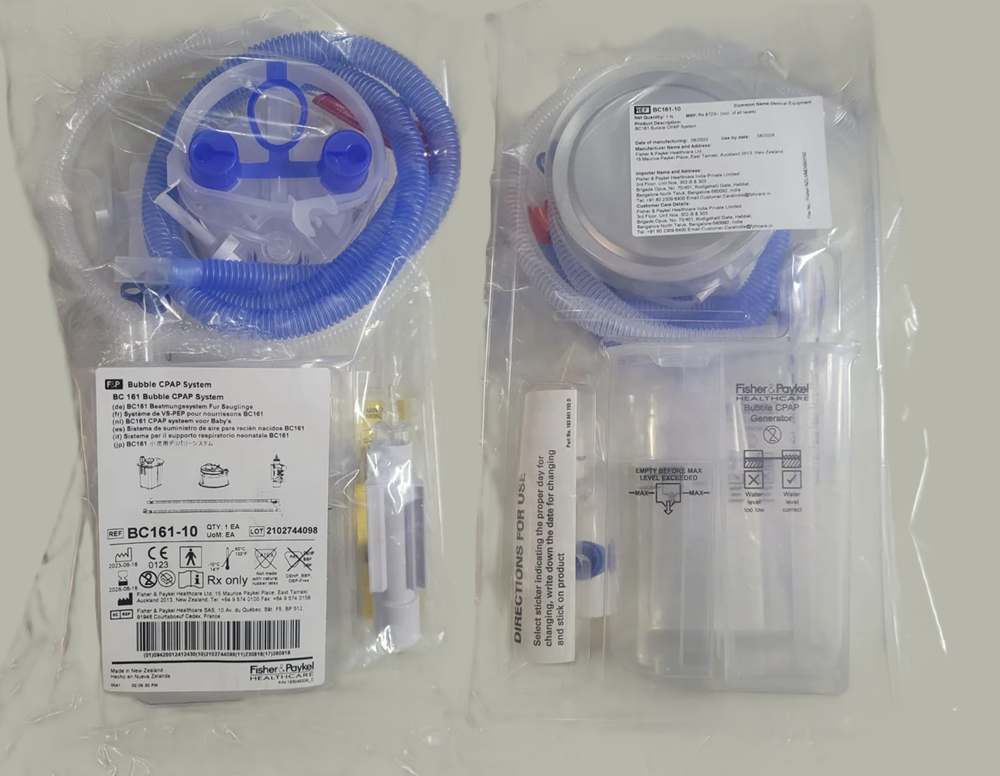
The difference is the patient interface connection. The BC151 connects to third-party T-bar prong interfaces (e.g. Hudson, Inca), while the BC161 is designed specifically for the F&P Infant Interface (FlexiTrunk™). If your NICU uses — or plans to adopt — the F&P FlexiTrunk nasal tubing with F&P prongs or masks, the BC161 is the correct choice. The clinical circuit, humidification chamber, and CPAP generator are identical across both models.
The CPAP pressure in our unit drifts as condensate builds up. How does the BC161 generator prevent this?
This is a well-known issue with conventional bubble CPAP generators. The F&P generator solves it with an auto-leveling design — excess water is automatically diverted into a separate overflow chamber away from the main pressure-generating water column. Because the depth of the expiratory tube in water determines the delivered CPAP, keeping that level stable ensures the set pressure (3–10 cmH₂O) is maintained consistently even as condensate accumulates.
Our premature neonates are very sensitive to temperature. How does the heated circuit prevent cold gas delivery?
The inspiratory limb uses a spiral heater wire running its entire length, providing even heat distribution rather than spot heating at one point. This prevents the gas from cooling as it travels from the humidifier chamber to the patient interface — a particular concern in open radiant warmer environments or air-conditioned NICUs. The circuit works in tandem with the MR850 humidifier (set to Invasive Mode) to deliver gas at optimal temperature and humidity all the way to the infant's nares.
